
Transforming Search and Rescue: Emerging Technological Advances in SARSAT
By Layne Carter, International Association of Search and Rescue Coordinators (IASARC)
Around the world, Search and Rescue (SAR) personnel rely on accurate, timely information to save lives. In the United States, the Search and Rescue Satellite-Aided Tracking (SARSAT) Program continues to evolve, strengthening this mission every day. Several significant advancements are now coming into view—advancements that promise to deliver faster detection, more reliable location data, and meaningful communication with people in distress.
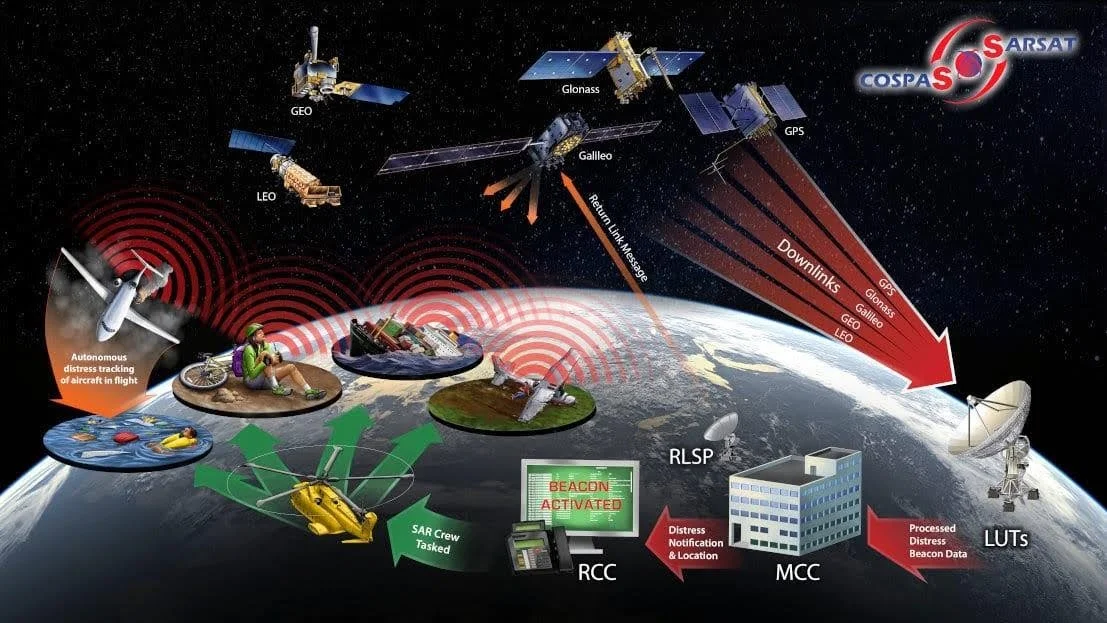
Image from https://www.sarsat.noaa.gov/about-sarsat/
These developments are part of a long-standing commitment by the U.S. SARSAT Program and its international partners within the International Cospas-Sarsat Program to enhance the global satellite-based distress alerting system and support rescuers who depend on it.
Second-Generation 406 MHz Distress Beacons: A New Standard for Survivability
For decades, 406 MHz beacons have been a cornerstone of global distress alerting. The next evolution—Second-Generation (or “Gen-2”) 406 beacons—is now nearing approval for use around the world.
Gen-2 beacons offer several life-saving advantages:
More precise encoded location data, enabling Rescue Coordination Centers to begin response with greater confidence.
Faster acquisition, helping reduce the time between activation and initial notification.
Improved data capacity, which lays the groundwork for additional features and future enhancements.
As more Gen-2 beacons enter service, both recreational users and professional mariners and aviators will benefit from better accuracy and quicker location determination—translating directly into shorter search times.
Two-Way Communications (TWC): A Breakthrough in Situational Awareness
One of the most transformative developments on the horizon is Two-Way Communications through 406 distress beacons.
Rather than only transmitting a one-way distress signal, future beacons will be able to send and receive simple, mission-critical messages, such as:
Confirmation that help is on the way
Basic instructions relevant to survivability
Requests for short responses (e.g., “injuries,” “vessel sinking,” “safe on land”)
This exchange doesn’t turn distress beacons into full messaging devices, but it adds just enough communication capability to improve decision-making on both ends. For the person in distress, reassurance and guidance reduce panic and can prevent secondary emergencies. For SAR coordinators, even limited information helps tailor the response and deploy the right resources at the right time.
TWC is expected to be one of the most significant upgrades in the history of the SARSAT program.
MEOSAR Full Operational Capability: Global Coverage, Faster Detections
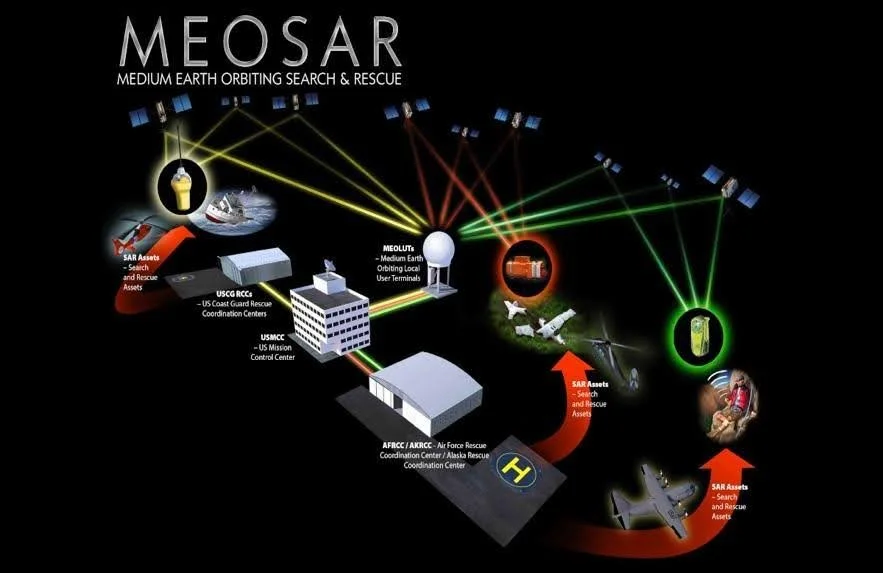
With the Medium-Earth Orbit Search and Rescue (MEOSAR) system nearing Full Operational Capability (FOC), the global SAR community is about to experience substantial improvements in detection and location times.
MEOSAR combines the reach of medium-earth-orbiting satellites with advanced processing at ground stations (MEOLUTs) to deliver:
Near-instantaneous beacon detection
High-accuracy independent location solutions
Improved resiliency through dozens of satellites in view
Enhanced performance in challenging environments, including areas affected by weather, terrain, or satellite geometry
As MEOSAR moves toward FOC, users can expect more reliable performance and unprecedented speed from the distress alerting system.
Why These Advancements Matter

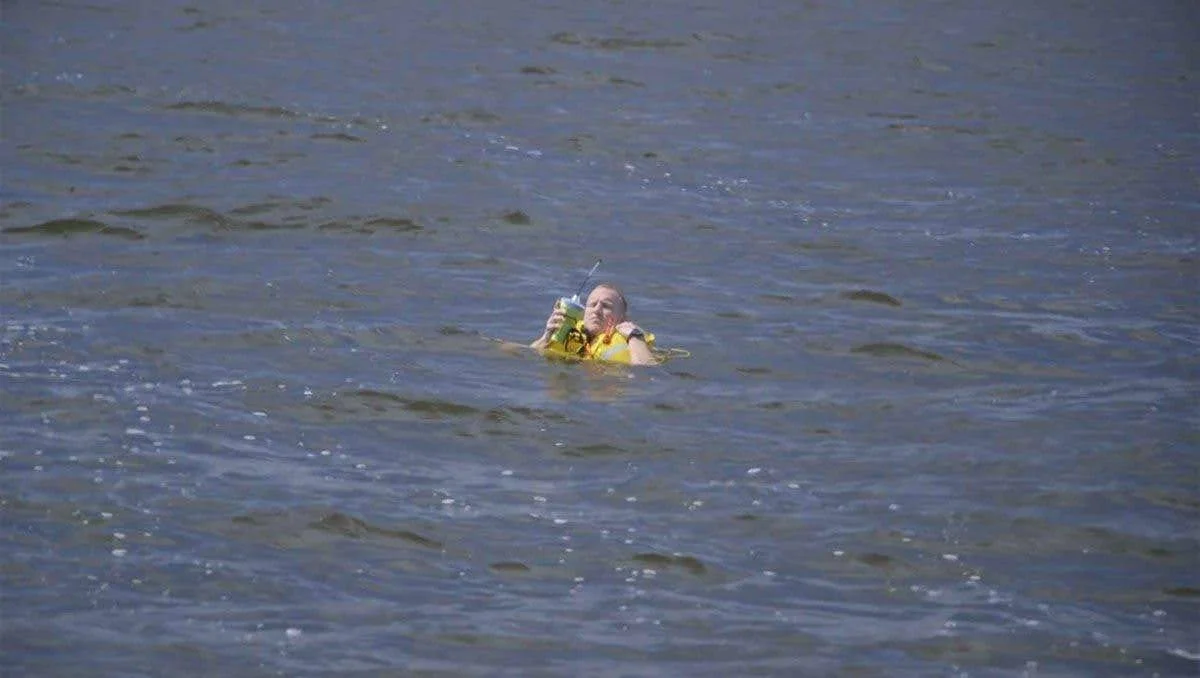
Coast Guard rescues U.S. citizen from life raft in Caribbean Sea near Puerto Rico (U.S. Coast Guard photo by Coast Guard PADET-SanJuan)
Every improvement in detection speed, location accuracy, and communication capability directly affects survivability. Shorter alerting times mean shorter response times. Better location data means more efficient rescues. Limited but meaningful two-way messaging can prevent confusion, reduce risk, and help responders tailor assistance before they even arrive.
For SAR coordinators, first responders, and volunteers worldwide, these advancements represent a new era in global search and rescue readiness.
Notable Links
Learn more about IASARC | News
To support IASARC’s lifesaving mission now | Donate
Follow IASARC | LinkedIn
