
Building a Global Standard: IASARC’s Drive to Create the World’s First ISO-Compliant Search and Rescue Coordinator Certification
The International Association of Search and Rescue Coordinators (IASARC) is moving to set a new global benchmark for public-safety professionalism: an ISO-compliant certification program for search and rescue (SAR) coordinators. By convening multinational expert committees, blending operational experience with formal standards practice, and designing a transparent, competency-based assessment system, IASARC aims to professionalize the role of SAR coordination worldwide — improving interoperability, raising response consistency, and giving governments and communities greater confidence in lifesaving leadership.
Why does an ISO-compliant certification matter?
Search and rescue coordination sits at the intersection of urgent decision-making, complex logistics, and cross-jurisdictional cooperation. Yet, training, qualifications, and role definitions vary widely between countries and agencies. An ISO-compliant certification indicates that a credential has been developed and delivered in accordance with internationally recognized principles of fairness, impartiality, and technical rigour. For stakeholders — governments, humanitarian agencies, insurers, and the public — it provides a consistent measure of a coordinator’s knowledge, skills, and ethical responsibilities.
IASARC’s ambition to align the program with ISO standards is more than a branding exercise. It commits the association to build transparent governance, impartial assessment, robust record-keeping, and an appeals process — all structures that reduce bias, encourage mobility of qualified personnel across borders, and increase trust in the credential.
Multinational Committees: Expertise at the Core
At the heart of IASARC’s approach are its multinational committees: working groups that bring together the world’s leading SAR practitioners, subject-matter experts, academic researchers, legal advisors, and representatives from emergency management bodies. These committees define the competency framework and assessment criteria, and ensure that IASARC’s certification program is internationally applicable yet rigorous enough to push the field’s current performance boundaries.
By spanning continents and disciplines, the committees ensure the certification reflects diverse operational contexts — mountain rescue, maritime search, urban incident response, and remote wilderness operations — while preserving a single, coherent standard.
Building a competency-based, fair assessment model
IASARC’s certification model emphasizes competency, not just seat-time. Candidates will be assessed against observable behaviors and performance outcomes rather than merely completing a checklist of courses. Key design elements include:
Multi-modal assessment: A blended approach combining a written knowledge exam and a review of documented experience, training, and professional contributions.
Independent Assessors: Trained assessors drawn from different nations and agencies to reduce local bias and to assure impartiality.
Robust appeals and re-certification: Clear appeals mechanisms and periodic re-certification requirements to ensure continuing competence and currency with evolving best practices.
This structure aligns with international certification standards and enhances the credential’s credibility across jurisdictions.
Governance, data protection, and ethical safeguards
Creating an internationally trusted credential requires governance that is transparent, secure, and resilient. IASARC is building policies for:
Data protection and privacy: Secure handling of applicant personal data and operational records, with safeguards for sensitive mission details.
Conflict-of-interest controls: Rules that prevent undue influence from vendors, political actors, or single agencies.
Appeals, remediation, and fairness: Clear pathways for candidates who fail assessments to receive feedback, remedial training, and re-assessment opportunities.
These systems are designed to meet both ISO standards and the practical needs of SAR organizations operating under public scrutiny.
Global impact: interoperability, mobility, and standards of care
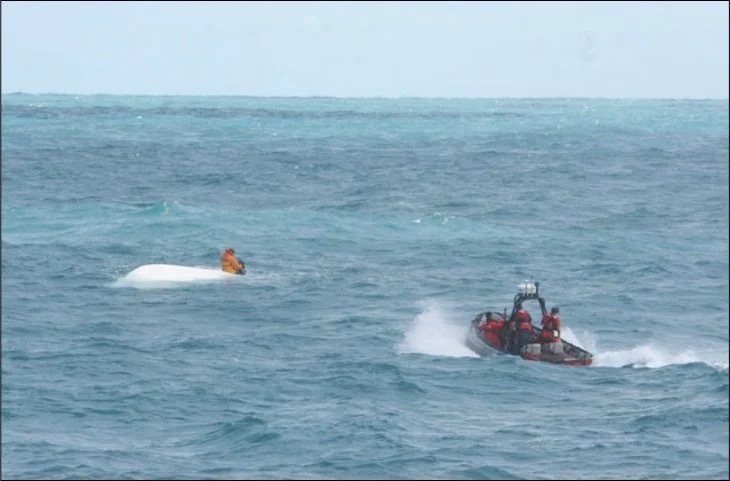
In 2009, after a vessel carrying three professional football players and their trainer capsized, a rescue boat approached as a lone survivor clung to the hull. Nearly fifty carefully coordinated air and surface searches covered about 25,000 square nautical miles, illustrating the complexity and expertise required for search and rescue coordination.
A successful ISO-compliant SAR coordinator certification will have broad, lasting effects:
Interoperability: Shared competencies and terminology make multinational responses smoother and reduce coordination friction in international disasters.
Workforce mobility: Recognized credentials make it easier for qualified coordinators to operate abroad or be seconded to international missions.
Professionalization: Clear competency standards and ethical obligations elevate the public profile and accountability of the SAR coordination profession.
Risk reduction: Better-trained coordinators can make faster, more effective decisions that save lives and minimize harm to responders.
For governments and humanitarian organizations, a common credential streamlines partner selection, mutual aid agreements, and funding decisions tied to capacity-building.
Challenges and the path forward
IASARC acknowledges the challenges: reconciling diverse legal frameworks, adapting standards to varied operational environments, translating materials into multiple languages, and resourcing rigorous assessments. Overcoming these hurdles requires patience, funding, and broad stakeholder buy-in — but IASARC is leveraging its network and multinational committees to iterate on the program through piloting and feedback loops rather than pursuing a single, monolithic launch.
Key next steps include finalizing the competency framework, piloting assessment centers in partner countries, seeking third-party accreditation where appropriate, and establishing an online certification management platform to handle applications, records, and re-certification workflows.
Conclusion
IASARC’s effort to create the world’s first ISO-compliant search and rescue coordinator certification represents a strategic push to unify and professionalize a vital public-safety function. By anchoring the program in multinational expertise and internationally recognized quality principles, the association is positioning the credential to improve the quality, consistency, and trustworthiness of SAR coordination worldwide. If successful, the initiative could become a model for how technical, high-stakes professions standardize competence across borders — a meaningful step toward safer communities and more effective, coordinated response when every minute counts.
Our sincerest appreciation to His Majesty’s Coastguard, the International Public Safety Qualifications Authority, IAMSAR Solutions, the Global SAR Hub, and all of our partners for getting us this far. We could not have done it without your support.
Learn more about IASARC - click here.
Support our lifesaving work - click here.
